| Page 35 | Kisaco Research

This judges’ panel offers candid insight into how courts approach patent disputes involving complex technologies, including software, electronics, and standards-based products. Drawing on recent decisions and, judges from key US jurisdictions will discuss what most influences outcomes from claim construction and technical tutorials to expert testimony and damages models.

Author:

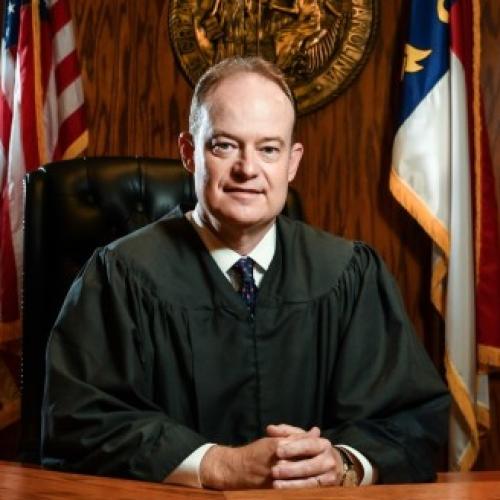
Klaus Grabinski

Honorable Judge & President of the Court of Appeals
Unified Patent Court (UPC)
Klaus Grabinski

Honorable Judge & President of the Court of Appeals
Unified Patent Court (UPC)

Author:

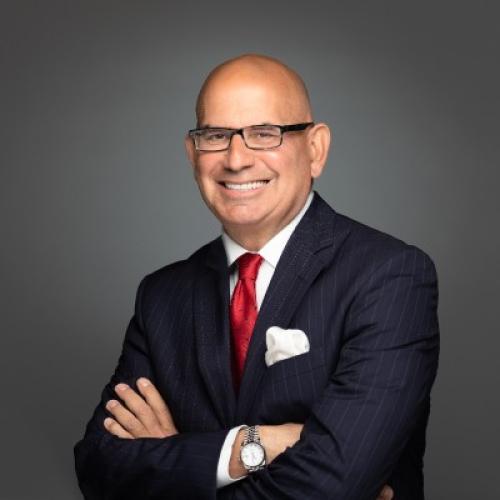
Martin McGee

Honorable Judge
State of North Carolina, Judicial District
Martin McGee

Honorable Judge
State of North Carolina, Judicial District
Hatch-Waxman case outcomes are often decided by early choices that shape risk, cost, and leverage long before trial. This session offers a structured review of how companies are building and defending Hatch-Waxman cases, from the first Paragraph IV notice through to final judgement.

  • Identify strategic decision points from Paragraph IV notice to trial, and where early decisions most influence outcomes.
  • Review recent key Hatch-Waxman cases, such as Jazz Pharmaceuticals, Inc. v. Avadel CNS Pharmaceuticals, LLC (Fed. Cir. 2025), and Jazz Pharmaceuticals, Inc. v. Avadel CNS Pharmaceuticals, LLC (Fed. Cir. 2025); examine how their outcomes have influenced litigation strategy.
  • Managing evidence, discovery scope, and expert strategy.
  • Compare US Hatch-Waxman litigation strategy to parallel approaches in Canada and other key jurisdictions, including differences in timing, remedies and leverage.

Author:

Jim Harrington

Chief Intellectual Property Counsel
Vera Therapeutics

Jim Harrington

Chief Intellectual Property Counsel
Vera Therapeutics

Author:

Laura Chubb

Director – Global IP Litigation
Organon

Laura Chubb

Director – Global IP Litigation
Organon

Author:

Megan Chacon

Principal
Fish & Richardson

Megan Chacon

Principal
Fish & Richardson

Ten years on from the enactment of the DTSA, trade secret law has become a core pillar of U.S. IP enforcement. Over that period, courts have clarified key aspects of the statute, including reasonable measures, extraterritorial reach, damages, and the interaction between federal and state trade secret claims. At the same time, in-house counsel, litigators, and policymakers have increasingly questioned whether the DTSA is operating as originally intended, or whether targeted reform is now needed to address cost, overreach, and changing business realities. This debate will assess whether the DTSA remains fit for purpose as it enters its second decade.

  • How DTSA jurisprudence has evolved since 2016, including court treatment of reasonable measures and trade secret identification.
  • Concerns around litigation cost, discovery burden, and overbroad claims in modern DTSA cases.
  • How courts are applying the DTSA’s extraterritorial provisions under 18 U.S.C. § 1837.
  • Whether recent enforcement outcomes and damages awards align with congressional intent.
  • Review the Uniform Law Commission’s Drafting Committee’s decisions in updating the Uniform Trade Secrets Act (UTSA).

Author:

Ken Corsello

US Trade Secrets Counsel / Patent Licensing Counsel
IBM Corporation

Ken Corsello is an IP Law Counsel at IBM.  He currently focuses on drafting and negotiating patent licenses and assignment agreements.  At IBM, he has worked on patent procurement, litigation, client counseling, product clearance, and IP transactional matters. 

Before joining IBM, Ken was a law clerk to Chief Judge Glenn Archer at the Federal Circuit; an Associate Solicitor in the USPTO; and in private practice at law firms in Washington, D.C.  He did his undergraduate work in Computer Science at SUNY Stony Brook, received his JD from the Catholic University, and obtained an LL.M. from George Washington University. 

Ken has been the chair of IPO’s Trade Secrets Committee since 2016.  His recent presentations on trade secret law include participating in a panel at the USPTO’s “Trending Issues in Trade Secrets: 2019” symposium and as a witness on behalf of IPO at the 2018 hearing on “Safeguarding Trade Secrets in the United States” held by the U.S. House Committee on the Judiciary, Subcommittee on Courts, Intellectual Property, and the Internet. 

Ken Corsello

US Trade Secrets Counsel / Patent Licensing Counsel
IBM Corporation

Ken Corsello is an IP Law Counsel at IBM.  He currently focuses on drafting and negotiating patent licenses and assignment agreements.  At IBM, he has worked on patent procurement, litigation, client counseling, product clearance, and IP transactional matters. 

Before joining IBM, Ken was a law clerk to Chief Judge Glenn Archer at the Federal Circuit; an Associate Solicitor in the USPTO; and in private practice at law firms in Washington, D.C.  He did his undergraduate work in Computer Science at SUNY Stony Brook, received his JD from the Catholic University, and obtained an LL.M. from George Washington University. 

Ken has been the chair of IPO’s Trade Secrets Committee since 2016.  His recent presentations on trade secret law include participating in a panel at the USPTO’s “Trending Issues in Trade Secrets: 2019” symposium and as a witness on behalf of IPO at the 2018 hearing on “Safeguarding Trade Secrets in the United States” held by the U.S. House Committee on the Judiciary, Subcommittee on Courts, Intellectual Property, and the Internet. 

This presentation uses litigation and settlement data to examine how patent type, timing, and strategy influence settlement outcomes, retained exclusivity, and overall leverage across pharma patent litigation.

Author:

Charles Haisch

Executive VP Legal & Regulatory Analysis
IPD Analytics

Charles Haisch

Executive VP Legal & Regulatory Analysis
IPD Analytics

Author:

Scott Allen

VP Legal & Regulatory Analysis
IPD Analytics

Scott Allen

VP Legal & Regulatory Analysis
IPD Analytics

Gain firsthand insight into how judges from the PTAB and federal courts in key jurisdictions are approaching pharmaceutical and biotech patent disputes. This session offers a rare opportunity to hear directly from the decision-makers on litigation strategy, evidentiary expectations, and what most influences outcomes in complex patent cases.

Author:

Klaus Grabinski

Honorable Judge & President of the Court of Appeals
Unified Patent Court (UPC)

Klaus Grabinski

Honorable Judge & President of the Court of Appeals
Unified Patent Court (UPC)

In light of recent changes in PTAB practice under new USPTO Director John A. Squires, in-house teams are reassessing disclosure risk, IPR exposure, and long-term enforceability, particularly for manufacturing processes, algorithms, and data-driven know-how. This session focuses on how companies are making these calls in practice, and how patent strategy is directly shaping trade secret risk in later disputes.

  • How PTAB institution trends, discretionary denial, and parallel-proceeding strategy are influencing decisions to rely more heavily on trade secrets.
  • Where patent specifications, prosecution history, and expert positions have later been used to argue that information was disclosed and no longer secret.
  • Managing the risk of over-disclosure in patent filings while preserving meaningful trade secret protection.
  • When companies deliberately shift from patenting to trade secret protection over a product’s lifecycle, and what triggers that shift.

Author:

Erica LoRe

Senior Director, Intellectual Property Counsel
Invivyd

Erica LoRe

Senior Director, Intellectual Property Counsel
Invivyd

Author:

Damon Gupta

Senior Patent Counsel
Genentech

Damon Gupta is a Director, Patent Counsel at Spark Therapeutics, Inc., a leader in gene therapy and member of the Roche Group. With over a decade of experience in intellectual property (IP) law and a background in molecular biology, Damon advises biotechnology and pharmaceutical companies on patent strategy, IP transactions, and risk mitigation. At Spark, Damon leads efforts to protect proprietary assets, including trade secrets, manage IP disputes, and provides IP support to cross-functional teams, including R&D, manufacturing, and corporate transactions. Damon holds a J.D. from Chicago-Kent College of Law, an M.S. from Baylor College of Medicine, and a B.S. from The Ohio State University.

Damon Gupta

Senior Patent Counsel
Genentech

Damon Gupta is a Director, Patent Counsel at Spark Therapeutics, Inc., a leader in gene therapy and member of the Roche Group. With over a decade of experience in intellectual property (IP) law and a background in molecular biology, Damon advises biotechnology and pharmaceutical companies on patent strategy, IP transactions, and risk mitigation. At Spark, Damon leads efforts to protect proprietary assets, including trade secrets, manage IP disputes, and provides IP support to cross-functional teams, including R&D, manufacturing, and corporate transactions. Damon holds a J.D. from Chicago-Kent College of Law, an M.S. from Baylor College of Medicine, and a B.S. from The Ohio State University.

Recent court decisions in Skinny Label cases show that liability increasingly focuses on post-launch conduct and real-world use, not label text alone. A panel of leading in-house counsel and litigators with innovative, biosimilar, and regulatory perspectives will address shifting litigation strategy.

  • How branded and biosimilar companies should align legal, regulatory, and commercial behaviour.
  • Analyse GSK v. Teva (Coreg) and the evidentiary role of marketing materials, sales conduct, and physician messaging.
  • Discuss the original ruling in Amarin Pharma v. Hikma (Fed. Cir. 2024) , and examine the significance of Supreme Court review.
  • Clarify evolving boundaries of permissible conduct for medical affairs, market access, and commercial teams.
  • Compare with decisions made in other key jurisdictions including Canada and Europe.

Author:

Chuck Klein

Partner
Winston & Strawn

Chuck Klein

Partner
Winston & Strawn

Author:

Sanjaya Mendis

Partner
McCarthy Tétrault LLP

Sanjaya Mendis is a partner and life sciences IP litigator at McCarthy Tétrault LLP based in Toronto, Canada. The IP Litigation group is ranked Band 1 in Chambers and recently received the Patent Litigation Firm of the Year by LMG Life Sciences. Sanjaya handles complex cross-border contentious patent disputes and has represented clients in all levels of Canadian courts, including the Supreme Court. Sanjaya’s recent notable experience includes: Regeneron/Bayer (aflibercept); AbbVie (adalimumab); Merck (sitagliptin); and BMS/Pfizer (apixaban).

Sanjaya Mendis

Partner
McCarthy Tétrault LLP

Sanjaya Mendis is a partner and life sciences IP litigator at McCarthy Tétrault LLP based in Toronto, Canada. The IP Litigation group is ranked Band 1 in Chambers and recently received the Patent Litigation Firm of the Year by LMG Life Sciences. Sanjaya handles complex cross-border contentious patent disputes and has represented clients in all levels of Canadian courts, including the Supreme Court. Sanjaya’s recent notable experience includes: Regeneron/Bayer (aflibercept); AbbVie (adalimumab); Merck (sitagliptin); and BMS/Pfizer (apixaban).

Author:

Shana Cyr

Head of Patent Litigation
Bristol Myers Squibb

Shana Cyr

Head of Patent Litigation
Bristol Myers Squibb

Author:

Viviane Kunisawa

Partner
Daniel Law

Viviane Kunisawa

Partner
Daniel Law

Artificial intelligence is transforming the trade secret threat landscape. As companies deploy internal AI tools, enterprise search, co-pilots, and agentic systems, the risks posed are increasingly subtle, scalable, and harder-to-detect. Employees can extract and synthesise sensitive information without direct access to underlying repositories, and at a speed and scale that outpaces many legacy legal technical and compliance controls.  This session will examine the risks posed by internal use of artificial intelligence, consider how AI is changing the mechanics of trade secret misappropriation, and question how legal, technical, and governance frameworks must evolve in response.

  • Examine how AI changes the mechanics of trade secret misappropriation, internal access, intent monitoring and proof.
  • Explore how agentic AI may enable the collection summarisation and external extra-filtration of sensitive information.
  • Address the growing tension between productivity and protection - how can companies embrace AI tools without unintentionally creating a machine assisted insider threat environment?
  • Discuss emerging legal, technical, investigative and governance challenges, such as: When does an AI query constitute misappropriation? How should practitioners design reasonable measures, considering the risks posed by internal AI use?

Author:

Erik Laykin

CEO and Managing Partner
Global Data Risk LLC

Erik Laykin is the CEO and Managing Partner of Global Data Risk LLC. He manages complex investigations and disputes in a variety of industries including financial services, technology and international trade on behalf of litigants, corporations and government agencies. Mr. Laykin serves as an expert witness, investigator, Special Master, and Independent Neutral in cases involving intellectual property, cyber crime, information technology failures, geopolitical risk, financial services risk, valuations, eDiscovery, corporate espionage and other complex disputes which arise from the usage of digital data, computers, software, networks and the Internet.


Mr. Laykin has been recognized as one of the world’s leading authorities on Trade Secret theft and investigations and has had over 100 expert witness appointments.

Erik Laykin

CEO and Managing Partner
Global Data Risk LLC

Erik Laykin is the CEO and Managing Partner of Global Data Risk LLC. He manages complex investigations and disputes in a variety of industries including financial services, technology and international trade on behalf of litigants, corporations and government agencies. Mr. Laykin serves as an expert witness, investigator, Special Master, and Independent Neutral in cases involving intellectual property, cyber crime, information technology failures, geopolitical risk, financial services risk, valuations, eDiscovery, corporate espionage and other complex disputes which arise from the usage of digital data, computers, software, networks and the Internet.


Mr. Laykin has been recognized as one of the world’s leading authorities on Trade Secret theft and investigations and has had over 100 expert witness appointments.